
How to Stop Buying Clothes You Don’t Wear: 9 Practical Rules
Almost everyone has clothes with the tags still on. They weren’t bad purchases because the item was ugly. They were bad because the item didn’t fit your life, your body or the rest of your wardrobe. The fix isn’t willpower; it’s a few questions you ask every time, before you pay.
The short answer: to stop buying clothes you don’t wear, check every item against what you already own. Only buy it if you can name at least three outfits with your current clothes, expect to wear it 30 times, it doesn’t duplicate something you have, and you still want it after waiting 48 hours.
Why we buy clothes we never wear
- We shop for an imagined life: the parties, hikes and dinners we don’t actually go to
- We buy pieces that need other new pieces to work
- We duplicate what we already own because we can’t see it all at once
- Sales and “last chance” messages rush the decision
- The fit is almost right and we hope it will be fine
Every rule below targets one of these causes.
9 rules for shopping smarter for clothes
1. The 30-wears test
Ask honestly: will I wear this at least 30 times? That’s once a week for about seven months, or every few days for a season. If the answer is “maybe for one event”, think about borrowing, renting or re-wearing something instead.
2. The 3-outfit rule
Before buying, name three complete outfits you could wear it in, using only clothes you already own. If you can’t, the item will need more shopping to be useful, and that’s how a single impulse purchase becomes four.
3. Check for duplicates
Most wardrobes have a “comfort zone” category: the fifth black top, the third grey cardigan. Before buying, check whether you already own something that does the same job. If the new piece is only slightly different, skip it.
4. Think in cost per wear
Divide the price by the number of times you realistically expect to wear it. A well-made coat worn a hundred times often costs less per wear than a cheap top worn twice. Cost per wear turns “expensive” and “cheap” into something more useful: value.
Read more: what cost per wear is and how to calculate it →
5. Wait 48 hours
For anything that isn’t an urgent replacement, wait two days. Save the item, put a reminder on your phone, and walk away. If you still want it, and still remember it, it’s probably a real need. Most impulse cravings disappear by the next morning.
6. Fit is non-negotiable
Don’t buy for the body you plan to have or hope alterations will fix everything. Sit, raise your arms, walk. If it pulls, gapes or needs constant adjusting, it will stay in the wardrobe.
7. Shop with a list of real gaps
A gap is something that blocks several outfits, for example no trousers that work with your boots. A craving is another beige knit. Keep a short gap list on your phone and shop for that, not for whatever’s in the window.
8. Check the care label
Dry-clean-only, hand-wash-only and iron-every-time pieces quietly lose to easy ones. If you know you won’t follow the care instructions, the item will be worn less than you think.
9. One in, one out
For categories where you already have plenty, adopt a simple rule: something new comes in only if something leaves: donated, sold or passed on. It keeps the wardrobe from growing back after every clear-out.
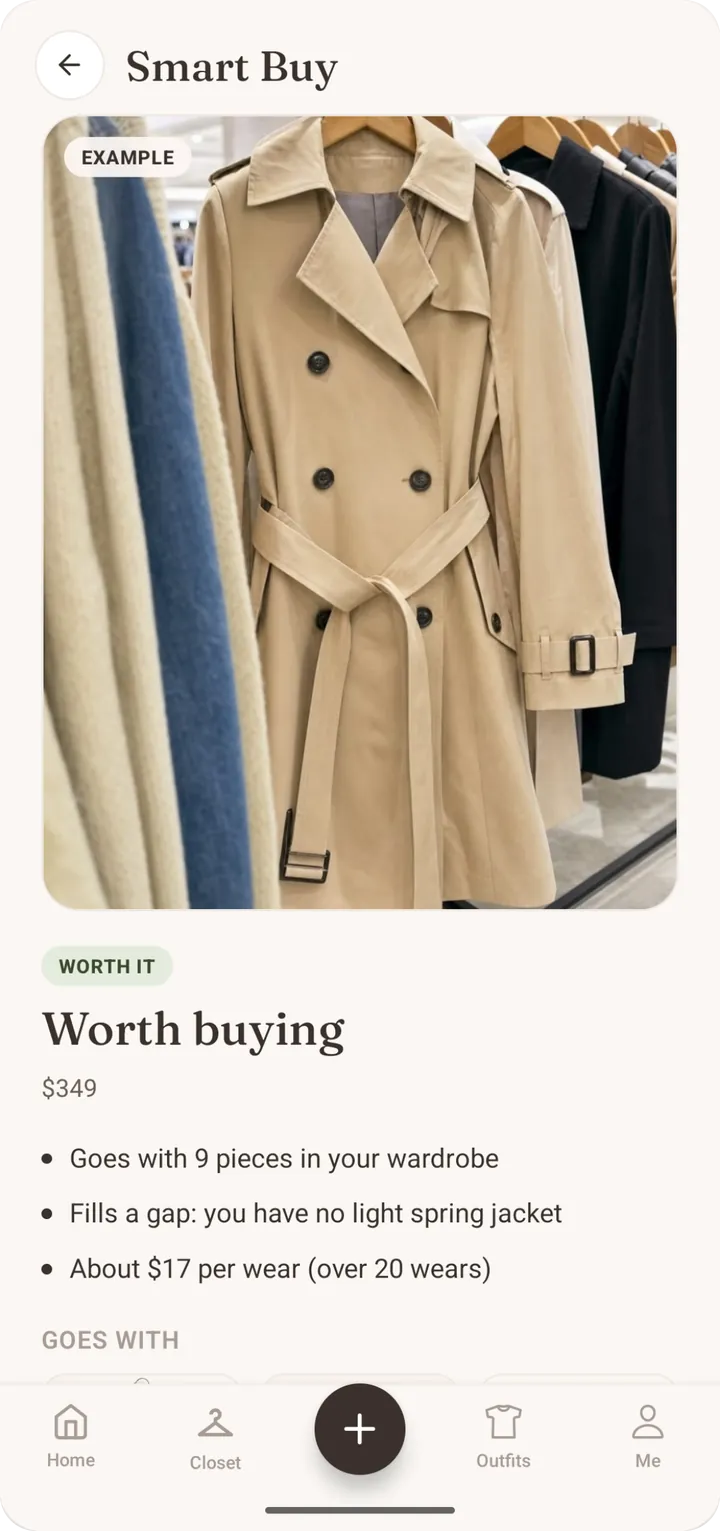
“Should I buy it?”: a 60-second check in the shop
The rules above are easy at home and hard in a changing room. That’s exactly why Closie has Smart Buy. You photograph the item in the shop and Closie checks it against your digital wardrobe:
- Does it duplicate something you already own?
- What does it pair with in your wardrobe?
- How could you wear it: outfit ideas built from your clothes
- A clear verdict: buy or skip
You can save the item for later (useful for the 48-hour rule) and mark it as “bought” or “skipped” afterwards. Since the item is in Closie, you can also preview an outfit with it on an avatar made from your photo using AI try-on.
See how virtual try-on shows outfits on your own figure →
Before you go shopping: a 20-minute wardrobe check
Most bad purchases are decided before you leave the house, because you go out without knowing what you have. Twenty minutes at home changes that.
- Take out the category you plan to shop for, for example all your knitwear
- Count it. Most people are surprised by the number
- Put aside anything that doesn’t fit or that you haven’t worn this season, and note why
- Write down the one or two gaps that really block outfits
- Set a budget for those gaps and nothing else
The notes on why you don’t wear certain pieces are the most useful part. If three knits sit unused because they itch, the rule for the next one is simple: check the fabric label before you look at the price.
How to stop buying clothes altogether (for a while)
If you want a full break, try a no-buy month or season. Define exceptions in advance (genuine replacements, underwear, items for a specific need), unsubscribe from shop newsletters, and fill the time with “shopping your closet”: build new outfits from pieces you haven’t worn for a while. Many women find they enjoy their wardrobe more after a pause, because they finally see what’s in it.
How do I stop buying clothes I don’t wear?
Check every purchase against what you own: name three outfits with your existing clothes, expect at least 30 wears, avoid duplicates and wait 48 hours before non-essential buys. Keeping a list of genuine gaps and shopping only for those also helps.
What is the 30-wears rule?
It’s a simple test: before buying, ask yourself whether you will wear the item at least 30 times. If not, it may not be worth the money or the space. It pairs well with thinking in cost per wear.
How do I know if I should buy a piece of clothing?
Buy it if it fills a real gap, fits well now, combines with at least three things you own, isn’t a near-duplicate and you still want it after a short pause. Closie’s Smart Buy runs a similar check against your wardrobe and gives a buy-or-skip verdict.
Is cost per wear a good way to judge clothes?
It’s one of the most useful ways. Dividing the price by the realistic number of wears shows the real value of an item. A pricier piece you wear constantly is often better value than a bargain you wear twice.
How many Smart Buy checks do I get for free?
The free Closie plan includes 3 Smart Buy checks per month. Closie Plus includes 15 per month, and one-off packs of extra checks are available even without a subscription.
Check your next purchase with Smart Buy in Closie
Get Closie Plus