
PAO Symbol: How Long Can You Use Cosmetics After Opening?
Flip over almost any jar of moisturizer and you’ll find a tiny drawing of an open jar with “6M” or “12M” on it. That’s the PAO symbol, and it answers a question most of us never ask: how long is this product meant to be used after I open it? Most bathroom shelves hold a few products long past that point.
The short answer: PAO means “period after opening”. The number followed by M is the number of months the manufacturer says the product stays good once opened, for example 12M means 12 months from the day you first open it. It’s different from an expiration date, which applies to the product sealed or from its manufacture date.
What the PAO symbol means
Once a product is opened, air, light, bacteria from your fingers and temperature changes start to affect it. Preservatives slow this down but don’t stop it forever. The PAO tells you the window in which the manufacturer expects the product to stay safe and work as intended under normal use.
- 3M: three months after opening, common on mascara and some liquid eye products
- 6M: six months, common on eye creams, some serums and natural or low-preservative products
- 12M: twelve months, common on many creams, lotions and cleansers
- 18M–24M: often on powders, lipsticks and products with little or no water
PAO vs. expiration date vs. “best before”
Expiration date
An expiration date (or “EXP”) is a fixed calendar date. In the US, products regulated as over-the-counter drugs, such as sunscreens and many acne treatments, generally carry an expiration date. Don’t use sunscreen past it: the protection it promises may no longer hold.
PAO
PAO counts from the day you open the product, so the end date is different for every jar. In the EU, products with a shelf life of more than 30 months must show the PAO. That’s why the symbol is so common, including on products sold in the US by international brands.
Best before (hourglass symbol)
In the EU, products with a shelf life of 30 months or less must instead show a “best used before” date, sometimes with a small hourglass symbol.
In the US, the FDA does not require expiration dates on cosmetics in general, so some products carry a PAO, some a date, and some neither. If a product has neither, treat it as a sign to note when you opened it and use your judgment.
Typical timelines after opening
The label on your product always wins. When there isn’t one, these are commonly cited ranges, not rules:
- Mascara and liquid eyeliner: around 3 months
- Eye creams and liquid concealer: around 6 months to a year
- Vitamin C serums: often 3 to 6 months, sooner if they change color
- Creams and lotions in jars: around 6 to 12 months
- Creams and lotions in pumps or tubes: around 12 months
- Cleansers: around 12 months
- Lipstick and lip balm: around 12 to 24 months
- Powders (blush, eyeshadow, setting powder): around 24 months
- Sunscreen: until the expiration date printed on the pack, and replace it if it has been stored somewhere hot
Signs a product has gone off
A product can go bad before its PAO if it’s stored poorly or contaminated. Stop using it if you notice:
- A change in smell, such as sour, rancid or simply “off”
- A change in color, for example a vitamin C serum turning dark orange or brown
- Separation that doesn’t mix back, graininess, or a change in texture
- Mold, spots or film on the surface
- Stinging, redness or irritation from a product that used to feel fine
Does using expired skincare matter?
Sometimes nothing happens. But the ingredients that give a product its point (antioxidants, sunscreen filters, retinoids) can lose strength, and preservatives can stop doing their job, which matters most for eye products. Expired sunscreen is the clearest case: you may be getting less protection than you think. When in doubt, throw it out, and don’t share eye products.
How to make products last until their PAO
- Close lids tightly after every use
- Use a clean spatula instead of fingers for jars
- Store products away from heat and direct sunlight (a steamy bathroom shelf next to the shower isn’t ideal)
- Don’t add water to products to “stretch” them
- Keep eye products for yourself
- Don’t leave sunscreen in a hot car
The real problem: too many products open at once
Most waste doesn’t come from forgetting the PAO; it comes from opening a new moisturizer before finishing the last one. Three open serums with six-month PAOs means at least two of them will likely expire half-used. A simple rule helps: one open product per step, and finish it before opening the next. Unopened products wait in a drawer, where their clock hasn’t started yet.
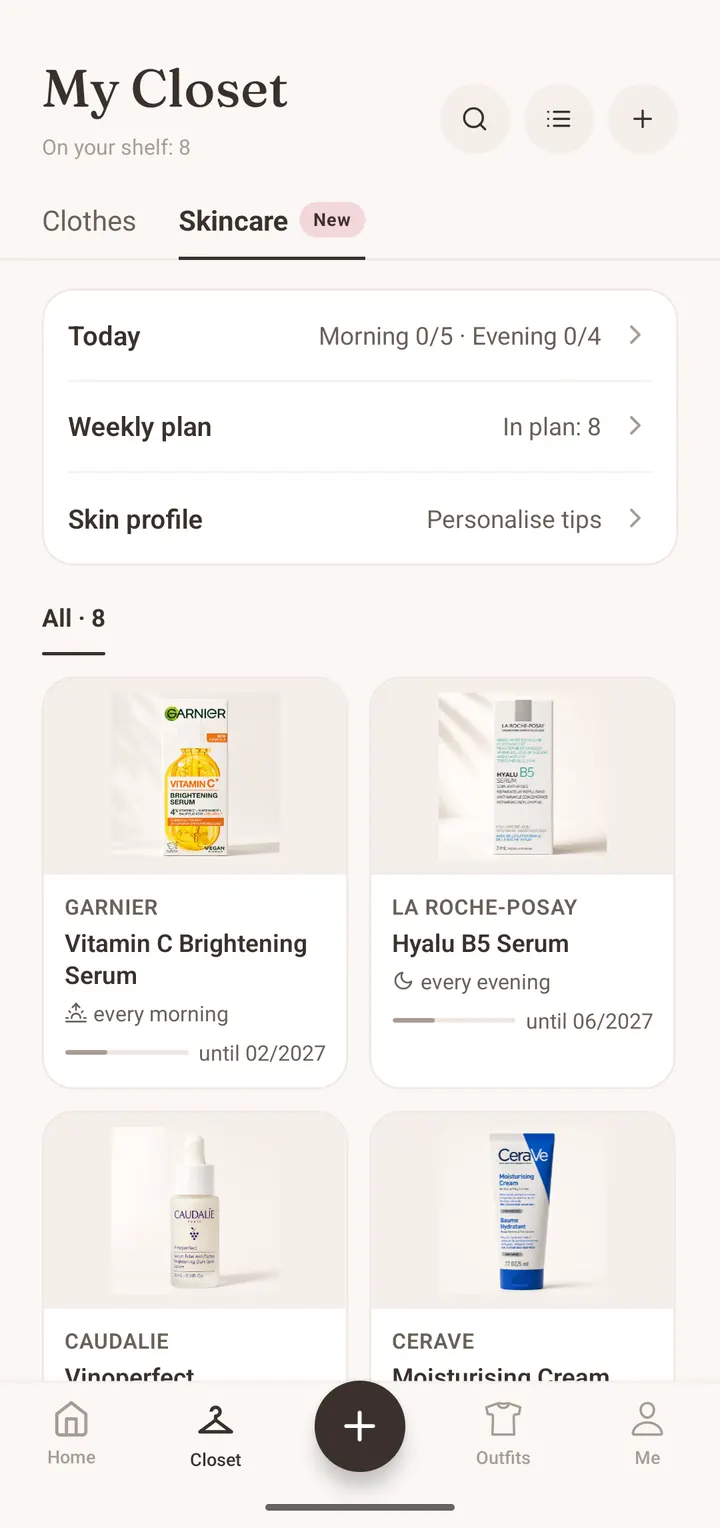
If you’d rather not track dates on stickers, Closie Plus includes Skincare: add a product by scanning its barcode or photographing the pack, enter the day you opened it and the PAO, and Closie works out when to use it up. Products close to their date are easy to spot on your shelf, and when something runs out you can mark whether you’d buy it again so it lands on your shopping list. Closie Skincare is not a medical device. It simply helps you keep track of what you own.
How to organize your skincare and stop wasting expired products →
What does 12M mean on cosmetics?
It’s the PAO (period after opening): the product is meant to be used within 12 months of the day you first open it.
Does the PAO apply to unopened products?
No. PAO starts when you open the product. Unopened products have their own shelf life, which may be shown as an expiration or best-before date.
Do cosmetics expire if never opened?
Yes, eventually. Ingredients can still degrade over time, especially with heat. If a product has an expiration date, follow it; if not, many unopened products are commonly considered good for a few years when stored well.
Is the PAO symbol required in the US?
No. The FDA doesn’t require expiration dates on cosmetics in general, and the PAO symbol comes from EU rules. Many products sold in the US carry it anyway. Sunscreens, as OTC drugs, generally carry an expiration date.
How long does mascara last after opening?
Commonly around three months. Mascara wands touch your eyes and go back into the tube, so it’s one product worth replacing on time.
How the Closie skincare routine app plans your morning and night →
Know what to use up first with Closie Plus Skincare
Get Closie Plus