
Black Friday Clothes Shopping: How to Buy Smarter in 2026
Black Friday is designed to make you buy fast. Countdown timers, “only 3 left” banners and percentages in huge type all push the same decision: buy now, think later. For clothes, that’s exactly how wardrobes fill up with pieces that still have the tags on in March. The fix isn’t to skip the sales entirely. It’s to decide what you need before the sales start.
The short answer: make a list from your actual wardrobe gaps before Black Friday (November 27, 2026 in the US), track the prices of those items in advance, check return policies, and for every item ask how many times you’ll wear it and what you’ll wear it with. If it doesn’t pair with at least three things you already own, the discount doesn’t matter.
Before Black Friday: shop your closet first
Spend twenty minutes in front of your wardrobe two or three weeks before the sales. Look for genuine gaps, not just things you’d like:
- Something worn out that you wear constantly (your everyday jeans, winter boots, a coat)
- A missing basic that would unlock many outfits, for example a neutral knit that goes with your skirts and trousers
- An upcoming need: a winter coat, a holiday party outfit, work clothes for a new job
Write down the specific item, the color and your budget. “Black straight-leg trousers, under $80” is a list. “Something nice” is how impulse buys happen.
Know what a real discount looks like
A percentage is only meaningful compared with the price the item actually sold for before the sale. Some retailers raise prices or inflate “original” prices ahead of big sales; the FTC has guidance against deceptive former-price comparisons, but it’s still worth checking for yourself.
- Save the items from your list now and note their current price
- Use a browser price-tracking extension or the store’s own price history where available
- Compare the same item across retailers
- Be skeptical of brands that are “on sale” most of the year
- Watch shipping costs and minimum order thresholds that push you to add more
Use cost per wear, not the discount, to decide
Cost per wear is the price divided by the number of times you wear something. It changes the question from “how much am I saving?” to “how much will each wear cost me?”
- A $150 coat (down from $220) worn 100 times over three winters: $1.50 per wear
- A $30 sequin top (down from $60) worn twice: $15 per wear
The bigger discount produced the more expensive purchase. Black Friday is a great time to buy items you’ll wear constantly and a bad time to buy items you’ll wear rarely, however cheap they look.
Cost per wear: what it is and how to calculate it →
The pre-buy check: five questions
- Was it on my list before the sale started?
- What three things I already own will I wear it with?
- How many times will I realistically wear it this season?
- Do I already own something that does the same job?
- Would I buy it at full price if I truly needed it?
If you can’t answer the second question quickly, skip it. That’s the one that predicts whether something gets worn.
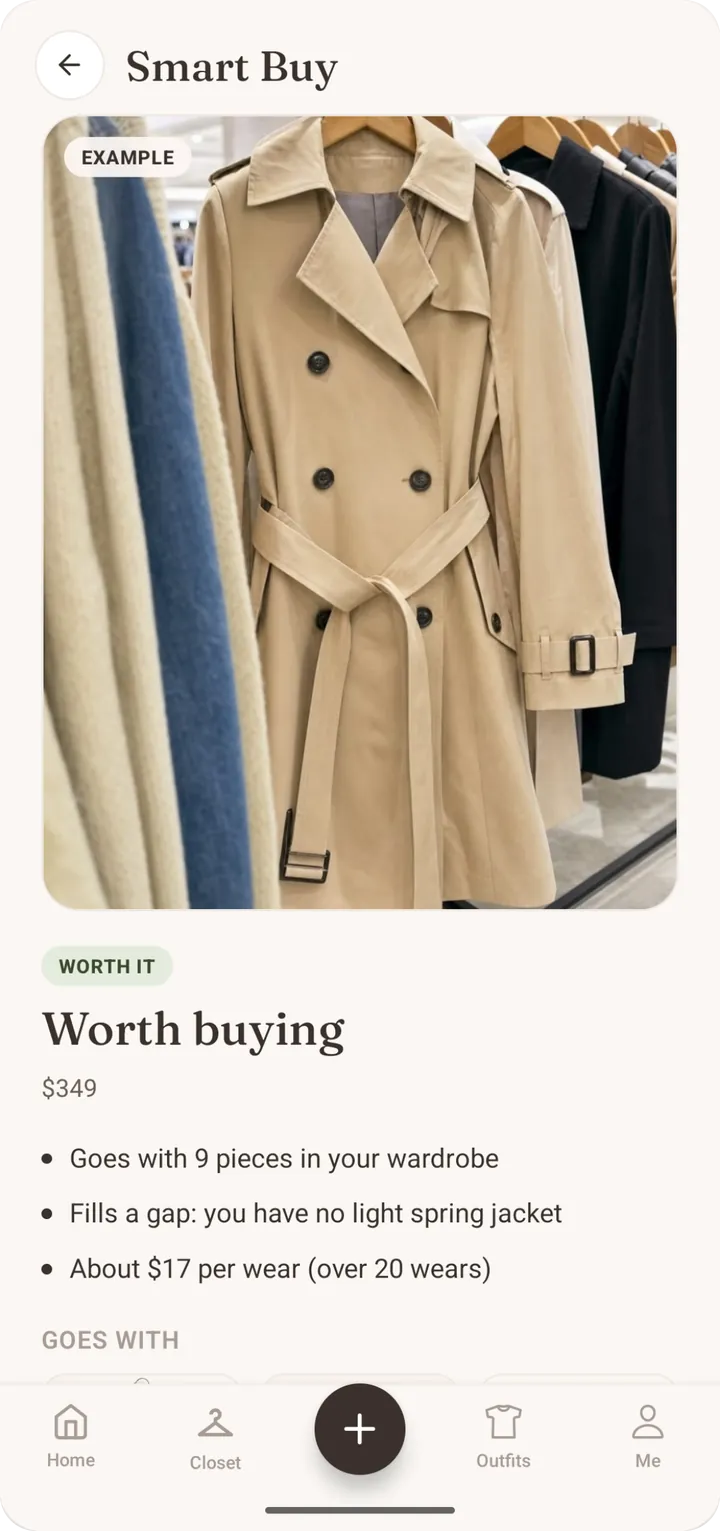
This is the check Closie’s Smart Buy is built for. Add a photo of an item you’re considering, and Closie tells you whether it goes with your closet, what it pairs with, whether you already own something similar and how much it may cost per wear. Anything you want to buy waits on your shopping list, which is useful when you’re building a Black Friday list in advance. The free plan includes 3 Smart Buy checks a month; Closie Plus includes 15, for clothes and cosmetics.
Check the return policy before you pay
Return windows, final-sale items and return shipping fees vary a lot by retailer, and some sale items can’t be returned at all. Many retailers extend holiday return windows, but don’t assume. Before checkout, read the return policy for that specific item, keep receipts and order confirmations in one place, and try things on as soon as they arrive.
What’s worth buying on Black Friday
- Outerwear and winter boots you’ll wear for months
- Replacements for basics you wear weekly (jeans, knits, T-shirts) in sizes and fits you already know
- Quality pieces from brands you’ve bought from before
- Items that fill a gap you identified before the sales
What to skip
- Trend pieces you’re unsure about, “because they’re cheap”
- Multi-buy deals (“3 for 2”) for things you only need one of
- Sizes that don’t quite fit, in the hope they will
- Party outfits you’ll wear once, unless you have a specific event
- Anything final sale from a brand whose sizing you don’t know
A simple Black Friday plan
- Early November: review your closet and write a list of gaps with budgets
- Mid-November: save the items, note current prices, check return policies
- Black Friday through Cyber Monday (November 27–30, 2026): buy only what’s on the list, at a price lower than you tracked
- When items arrive: try on immediately, return anything that isn’t right
How to stop buying clothes you don’t wear: 9 practical rules →
When is Black Friday 2026?
Black Friday 2026 is Friday, November 27, the day after Thanksgiving in the US. Cyber Monday is November 30, 2026. Many retailers start sales earlier in the month.
Is Black Friday a good time to buy clothes?
It can be, for items you planned to buy anyway, especially outerwear, boots and basics. It’s a poor time to buy things you didn’t need before the sale started.
How do I know if a Black Friday deal is real?
Track the item’s price for a few weeks before, compare across retailers and be wary of inflated “original” prices. A discount only matters compared with what the item actually sold for.
What is cost per wear?
The price of an item divided by the number of times you wear it. It helps you compare a cheap item you’ll rarely wear with a pricier one you’ll wear constantly.
How can I avoid impulse buying during sales?
Shop from a list made before the sales, wait 24 hours before paying, and make sure every item works with at least three things you already own.
How the Closie AI stylist works with your own clothes →
Check your Black Friday list against your closet with Smart Buy
Get Closie Plus